
BAT EXCLUSION
GUIDELINES FOR DEALING WITH BATS
Bats are a crucial part of our ecosystem and because they play a significant role in controlling the insect population, including many agricultural pests, it is vital we interact with and remove them safely. Bats are small mammals and can enter tiny spaces as small as 3/8-inch cracks in siding, vents and chimneys if not sealed properly. Go Pro Wildlife Removal Company offers safe and secure bat removal services, which is not harmful to the bats.
Large Colony of Bats Can Live in Attics
From May through July, some species of bats such as Mexican Free-Tailed Bats and Big Brown Bats can form a large colony in an attic or other space in your home. These colonies often have a maternal colony in which the female bats leave the babies, or pups, in the area. The bat pups are unable to fly, which can be an issue if an exclusion (placement of the one-way door to evict the bats out of the space) is completed at this time. The adult bats will fly out at night and feed, and if a bat exclusion is done at this time, the adults will not be able to get back into the space, and the pups will then starve and die. It can then cause another issue to the homeowner in the form of a very unpleasant smell.
During the winter months, bats may also go into dormancy (slowing of all body functions during short periods) or hibernation (slowing of all body functions during more extended periods) from January through March. Bat exclusion during this time is complicated, and the exclusion process will take more extended periods or will need to wait until the temperatures reach around 50 degrees. Due to the different seasons of bat behavior, we must consider proper timing for the humane exclusion of the bats. We work with our customers to give the best solution for your nuisance bat issues.
Common Diseases Spread By Bats
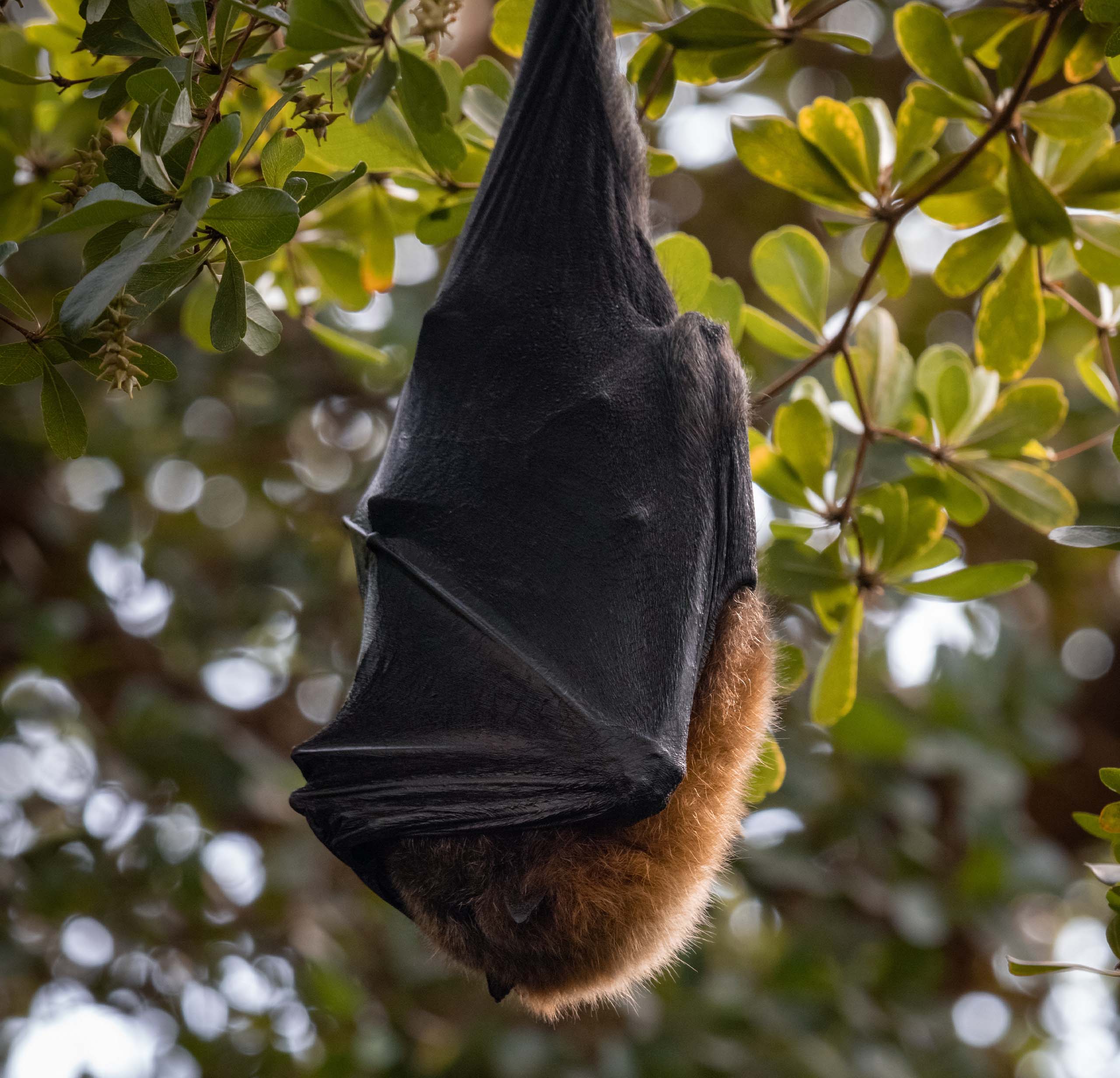
Bats carry a number of pathogens that can infect and cause illness in humans. Bat rabies are the most common type of rabies, and if contracted, there is no cure and is usually fatal. More than 200 diseases have been associated with bats. They can also spread Histoplasmosis and White Nose Syndrome.
What to Do If You Find a Bat in Your House
Many times, customers do not know they have bat issues until a bat makes its way into their home and is found flying around the house. Or perhaps they are enjoying a lovely early evening on the porch and see many bats flying out of an area of the home.
OUR BAT INSPECTION AND REMOVAL PROCESS
During the inspection process, we look for any openings that are small (or large) enough for a bat to enter, and then seal those gaps. Once the main entry point is located, we will install a one-way bat cone to allow any bats currently in the space to safely fly out at night. These bat cones do not allow the bat to re-enter the area, thus providing a humane exclusion. After about 1-3 days, we will return and do another inspection to make sure all the bats have exited the space. We will then remove the bat cone and adequately seal the entry point. Please note we will not remove bats with non-lighted young. The young in these maternal colonies will be old enough to leave the space around the first of August.
Frequently Asked Questions