
by TRIND Design
Share
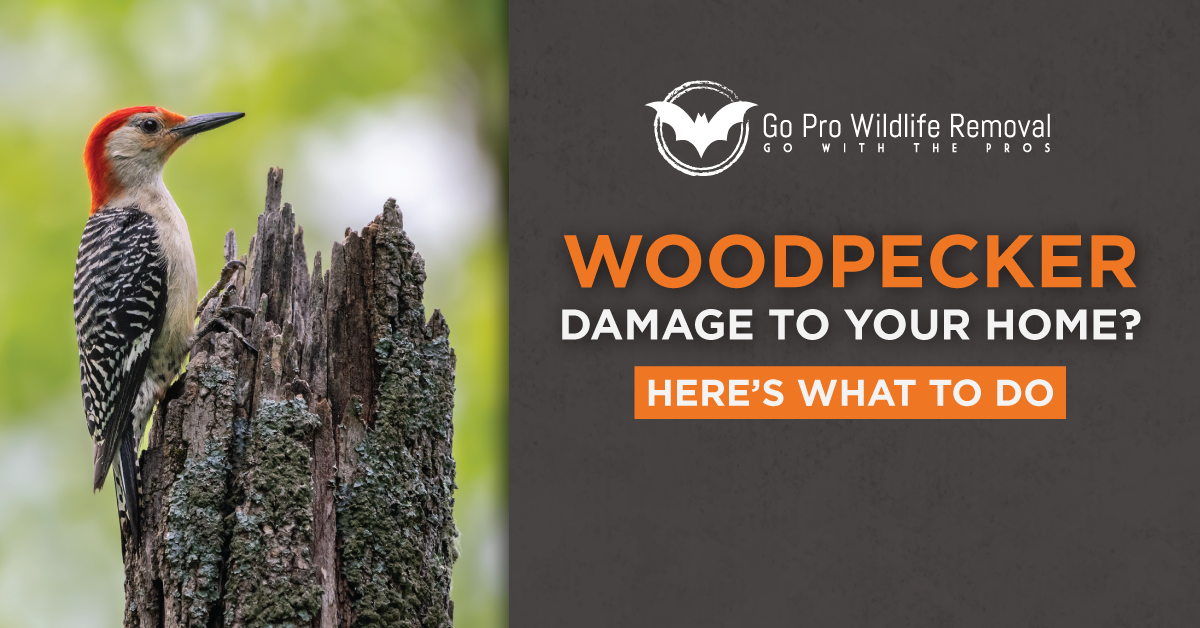
Have you been hearing relentless tapping coming from outside your home? Woodpecker nesting season ramps up in early spring, so you are not alone.
Though rarely considered a nuisance, you might be surprised at the damage a woodpecker can cause to your home. These small birds can cause major issues to the structure of your home if the problem goes unnoticed. There are safe and legal ways to address those mischievous woodpeckers.
Why Is a Woodpecker Pecking On My Home?
Before solving the problem, it is important to understand why a woodpecker is suddenly interested in your home. Woodpeckers, much like humans, actively seek shelter, and your home may be the perfect spot for wood pecking. Woodpeckers are drawn to a variety of surfaces, including wooden siding, wood boards and other structures, with aluminum gutters and LP (composite) siding being especially common targets in the Southeast.
1. Woodpeckers are looking for food.
Woodpeckers use their beaks to search for insects living inside the wood, carpenter bees, ants and termites. If your home is actively being drilled into by a woodpecker, it could be a sign of a bigger problem, like insect infestation.
2. They are drumming for a mate or territory.
Breeding season is most active March-June. During breeding season, woodpeckers drill or drum rapidly to attract mates.
3. They are building a nest.
Woodpeckers create large, rounded and deep holes for nesting or roosting. Males and females often work together to build and defend the nest. Nesting typically ramps up in early spring. If your house has any areas where wood is rotting, it can be particularly appealing to cavity nesting birds and other unwanted wildlife.
What Damage Can Woodpeckers Cause?
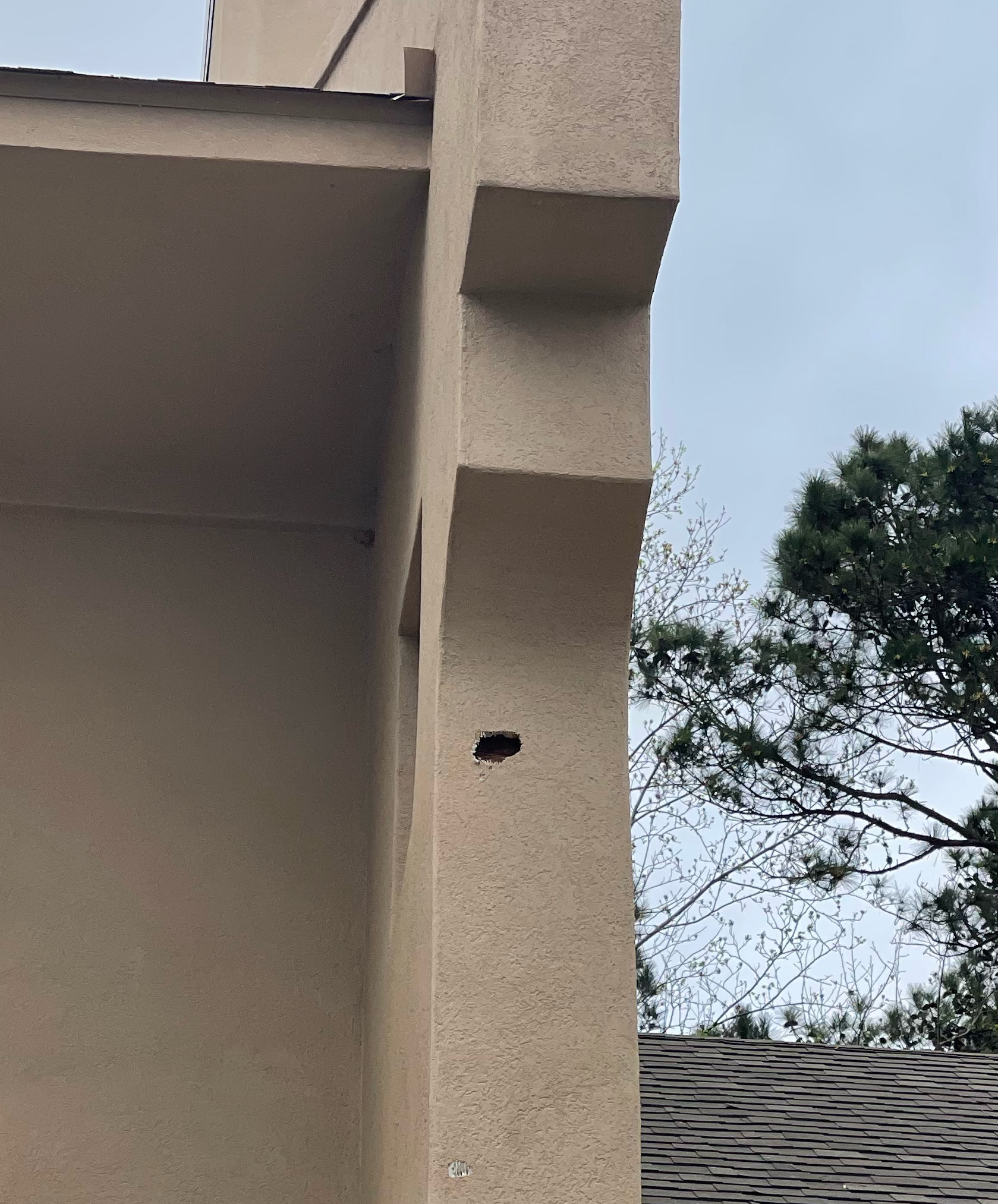
Woodpecker damage to stucco exterior wall
Woodpeckers can cause significant damage to homes by drilling small, deep feeding holes, large circular nesting cavities or drumming away at your siding, trim and eaves, leaving a trail of holes and creating plenty of noise. Their activity can lead to structural damage, costly repairs, water intrusion, wood rot and infestations of pests like bees or ants in siding. The damage may seem like minor holes at first, but here is the risk if overlooked:
- Moisture intrusion, the undesirable entry of water or water vapor into building materials, components or the building envelope (roofs, walls, foundations).
- Wildlife entry points, openings large enough to attract larger wildlife looking for a way inside.
- Structural weakening, repeated drilling into wood beams or siding can compromise the strength of your home’s framing over time.
Once a woodpecker finds a reliable nesting spot or food source on your home, it will return. Knowing how to handle woodpeckers is the first step in protecting your home from further damage.
Handling Woodpeckers Safely
Like many birds in the United States and Alabama, woodpeckers are protected by the Federal Migratory Bird Treaty Act, making it illegal to harm, kill or interfere with woodpeckers without proper permitting. When handling any federally protected bird, it’s important to make sure your approach is smart and legal. Let our team of experts handle the process safely and legally. The Go Pro Wildlife team is Bird Barrier® certified and prepared to handle the woodpecker exclusion process for you.
Go Pro Wildlife Removal is an experienced and knowledgeable team ready to help with the identification or removal of woodpeckers or other unwanted guests. We have the necessary tools and resources to protect your home and implement woodpecker control or exclusion options. To learn more about services or request an inspection, contact us through our website.
Wildlife Entry Points on Your Roof: What Homeowners Need to Know
Do you hear something crawling around in your attic, and aren’t sure what it is? It is most likely wildlife that has gained access through your and is now looking for shelter in your home.
Contact Info
Contact Go Pro today! We offer wildlife removal solutions in Auburn, Opelika, Lake Martin, Valley, Montgomery, AL and Columbus, GA areas.
Phone: (334) 744-0391
Hours: Open 9:00 am – 5:00 pm